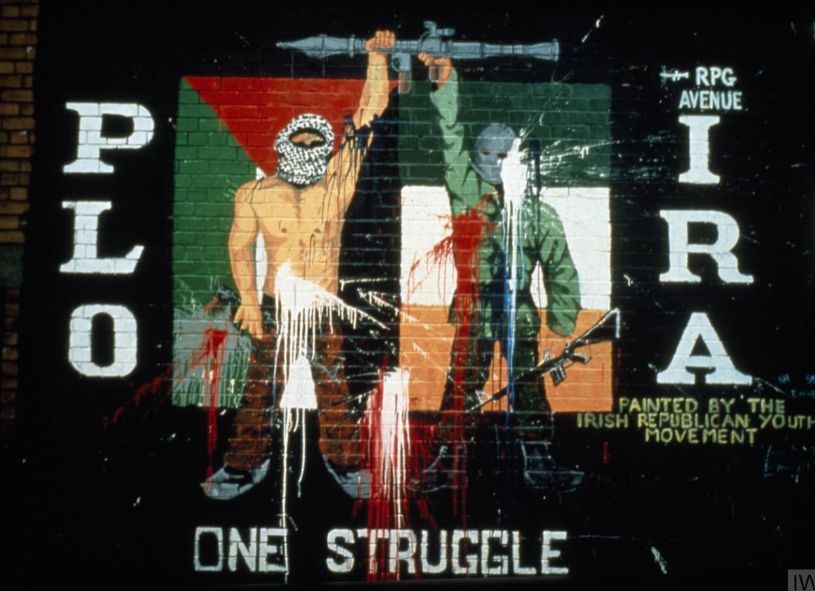
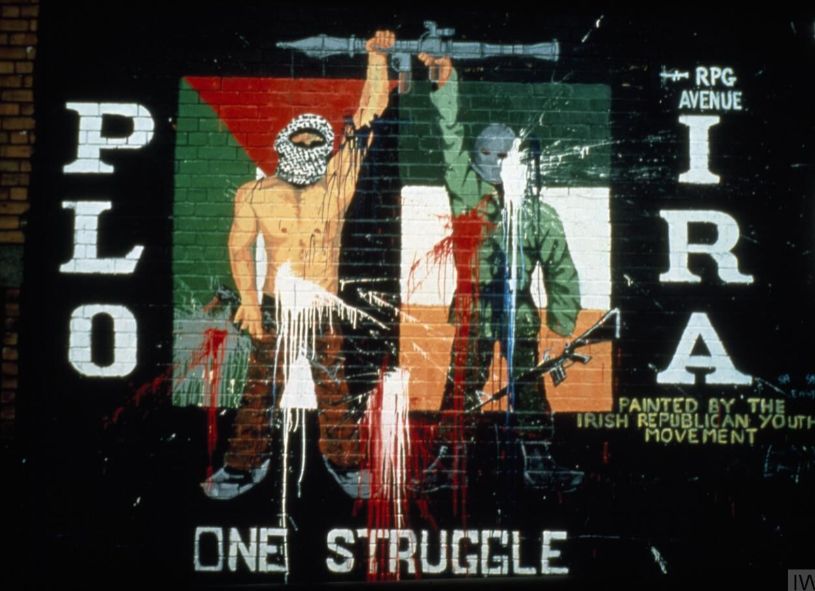
Ireland is part of a minority of Western nations that have been vocal in their support for Palestine over the previous two years. Indeed, public support for Gaza is widespread in the country, for several reasons. Connections between Palestine’s nationalist movement and Irelands are well known. The PLO and IRA murals can still be seen in Northern Ireland today. However, less nationalistic Irish people who may hate the IRA and its legacy are still usually sympathetic to Gazans. They may see Irish history as sharing similarities with that of Palestine. Both countries have been colonies of the United Kingdom and have experienced settler colonialism. Albeit Palestine is currently being subjected to this in the West Bank, whereas for Ireland it is in our distant past. For others, supporting Palestine is simply an obvious stand to have if one believes in international law and/or basic moral principles. It is not a position grounded in nationalism but in the present conditions Palestinians live under.
Regardless, the overwhelming public sympathy puts the Irish government in an awkward position. They obviously want to cater to voters and be seen to be upholding international law, which many do genuinely believe in, but must balance this with other factors.
In 2018 a bill was created in Irelands parliament called the occupied territories bill. If passed, it would outlaw trade with illegally established settlements in occupied territories. Those found to have breached the law would be punished by a 250,000 euro fine and up to five years in prison. This bill would not just apply to the West Bank, but any illegally occupied territory in the world. Eastern Ukraine, Western Sahara and Northern Cyprus come to mind.
Still, the implications were clearly negative for Israels settlement program in the West Bank. Soon after it passed the second stage in Parliament in 2019, a letter was received by the Irish government from the United States. Ten members of the U.S congress threatened that the bill, if implemented, would create potentially severe implications for Ireland economy. Ireland also received similar letters for state representatives who threatened negative repercussions for Irish workers in the United States. It was soon shelved by Ireland thereafter.
The bill soon saw renewed interested in October 2023 when Hamas launched the largest attack on Israel since 1973. Israels response, which has been labelled a genocide by a UN commission of inquiry, saw a new wave of voices in Ireland demand the bill be passed into law. The Irish government once again promised to do so, and once again received threats from the United States.
In 2025 the US State department commented directly:
“This legislation is unhelpful virtue signalling. It does not serve the cause of peace in the Middle East, which the US and partners are advancing … and could moreover adversely affect American businesses operating in Ireland. We are monitoring developments closely.” Additionally, several months previously, the US Ambassador to Ireland emailed the government warning of “consequences” and “unforeseen economic uncertainty” should the bill pass and advising them to conduct “due diligence.”
According to The Ditch, 90 minutes later Micheal Martin decided the bill would be reviewed rather than passed immediately. Weeks later, the bill was watered down to include goods but not services, which accounts for only 30% of Irish trade with the Occupied Territories. The Irish government still claim that it will soon be made into law.
An incredible moment from this whole debacle was Mike Huckabees reaction to the bill. For those who don’t know, Huckabee is the US ambassador to Israel. In July, he reacted to Irelands OTB with a racist remark about alcoholism. “Did the Irish fall into a vat of Guinness?” he wrote on twitter. This was obviously poorly received in Ireland.
What all of this has shown is that while Ireland is vocal in support of Palestine, it does not follow up its own words with actions. While symbolic, albeit still important, steps such as recognising Palestine have been taken, it is difficult for Ireland to take more concrete steps. Why is this? Because the Irish economy relies on the United States, a situation of our own making and entirely unrelated to Israel. No anti-Semitic conspiracies in my comment section please. Ireland’s fiscal watchdog estimates that 75% of all corporate tax is paid by large U.S. multinationals, with three firms responsible for almost 40% alone.
According to Reuters, this has transformed Irelands public finances into one of the healthiest in Europe. US dominated multi nationals also employ 11% of Irelands workforce. In an era where Trump is demanding US companies to return to the United States, and tariffing his allies and foes alike, Ireland is in a vulnerable position. If that remains the case, Irelands hand will continue to be limited when it comes to Palestine. Maintaining good relations with the United States will usually come first. It is a case of national interest over taking values. It is also in the interest of Irelands governing parties too. If they bring on an economic downturn how will that be received by their voters in the next election?
So, what is to be done? Well, diversifying our economy away from the United States is the obvious choice. But this is easier said than done, and it’s a slow process at that. It might even be forced on Ireland if Trumps trade wars take off again. In that situation, Ireland would have to either adapt quickly or end up in an economic crisis. For the foreseeable future Ireland will be where it currently is, comically reliant on a handful of multinationals and unwilling or unable to take concrete steps away from it. The price for this will be hypocrisy on its stance on Palestine. Words are cheap, actions are expensive.
Sources
Gritten, David. 2025 “Israel has committed genocide in Gaza, UN commission of inquiry says.” BBC, September 26 ( https://www.bbc.co.uk/news/articles/c8641wv0n4go).
Leahy, Pat. 2025. “US government labels Occupied Territories Bill ‘virtue signalling” Reuters. November, 24 (https://www.irishtimes.com/politics/2025/11/24/us-government-labels-occupied-territories-bill-virtue-signalling/).
Reuters. 2025. “What is Ireland’s exposure to the US economy and Trump’s plans?” March 11, (https://www.reuters.com/en/what-is-irelands-exposure-us-economy-trumps-plans-2025-03-11/).
Sabbagh, Dan. 2025. “Israel closes down or leaves unresolved 88% of cases of alleged war crimes or abuse – report.” The Guardian, August 2 (https://www.theguardian.com/world/2025/aug/02/idf-no-fault-conclusion-alleged-war-abuse-cases-report).
The Ditch. 2024. “US ambassador warned of ‘consequences’ for enacting Occupied Territories Bill – 90 minutes later Micheál Martin said it would be reviewed rather than passed.” November 5, (https://www.ontheditch.com/us-ambassador-warned/).
The Journal. 2019. “Government told that Occupied Territories Bill could affect immigration status of Irish in US.” May 17, ( https://www.thejournal.ie/occupied-territories-bill-irish-immigrants-usa-4638016-May2019/).
 Every Clime, Class and Colour
Leave a comment