It is quite popular to characterise North Korea as the last communist state, a Stalinist relic of the cold war. Certainly, the country was created by the USSR following the end of World War Two, and the state developed along the lines of many other communist states. It is hard to pinpoint when North Korea began to shift away from Marxist Leninism, and it is equally hard to determine if the Norths ruling class every took it as a guiding ideology. What I am sure of is that today’s North Korea certainly has no interest in it. Today’s video is going to discuss why, focusing on three characteristics of the state: Militarism, Racial Nationalism and Hereditary Leadership.

Hereditary Leadership
To start, North Korea functions as something close to a monarchy. The Kim family has ruled the country since at least the 1960s through a cult of personality with Kim Il Sung at the centre. In turn he groomed his son to be his successor which was successfully accomplished in the 1990s. Kim Jong Il ruled until his passing in the late 2000s, followed by his son Kim Jong Un. While many communist countries were dictatorships like the USSR or Mao’s China, communist states shunned such hereditary leadership. In fact, Kim Il Sung’s insistence on his son continuing his rule reportedly annoyed his allies in the CCP.
The Cult of personality surrounding the Kim family also frustrated the post Stalinist USSR. Some individual communists even considered a hereditary system to be akin to an absolute monarchy. No state in the communist world to my knowledge has ever had three generations of rulers from the same family. It is likely impossible for a North Korean to even imagine a future leader of a country that is not a Kim. Today it is still a custom in the North to have three portraits in your home: that of Kim Il Sung, Kim Jong Il and Kim Jong Un. The book Nothing to Envy even claims that it was a legal requirement in the 1990s.

Militarism
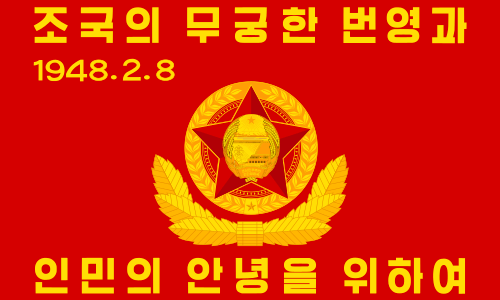
North Korea is the most militarized nation on earth with a mandatory service of 10 years for men. However, many men serve anywhere between 3 and 12. Because of this, North Korea has the third largest army in the world number 1.3 million active personnel and over 6 million in the reserves. This is out of a population size estimated at 26 million. Per capita, is unrivalled in its size. Only the United States and China have larger militaries by total number. Since at least the 1990s north Korea has followed a military first policy or “first military then labour” policy. This has replaced their term Juche in their propaganda messages. In other words, economic development has taken a backseat to militarisation. Since the 2000s worker party organisations in the North have abandoned discussing Juche and instead ordered to speak of military first politics. State media explained the term in April 2003 as follows:
“The vitality of legitimacy of a political method lies in its firm guarantee of the autonomy of country (nara) and race (minjok). The race is above class and social stratum, the homeland above ideology and doctrine.”
In other words, the government should not base is legitimacy of economic development but on propping up the military. Antagonizing their neighbours with their strength is a way for the government to show its legitimacy to its people. No other major communist power followed militarism to this degree. Economic development was how the USSR legitimised their rule. Industrialisation and agriculture development was used in their propaganda, not racial militarism. Even if their defence budget was colossal. North Koreas emphasis on their military is closer to Prussian or Japanese militarism than their supposed socialist brothers.
Racial Nationalism
Another way in which the North differs is the prominence of racial nationalism. BR Myers in The Cleanest Race: How North Koreans See Themselves and Why It Matters argues that racial purity is central in the Norths propaganda messages. Koreans are seen as the purist race in the world, not for any physical advantages but for their childlike virtue. This race-based nationalism differs greatly from the state nationalism of the USSR or Yugoslavia. It is again closer to Japanese nationalism or Nazi Germanys. Racial purity is routinely defended in North Korean newspapers. For example, in response to a half south Korean half American footballer being welcomed in the south Northern journalists published the following:
“Mono ethnicity is something that our nation and no other on earth can pride itself in…. there is no suppressing the nations shame and anger at the talk of a multi racial society which would dilute even the bloodline of our people.”
Again, this is not something a Soviet state newspaper would ever have published. Another example from 2013 which claimed to be the opinion from a north Korean labourer discussing Barrack Obama went as follows:
“Hideous Monkey Man, just looking at Obama’s ugly mug turns by stomach almost to the point of vomiting. That blackish mug, the vacant, ash-coloured eyes, the gaping nostrils: the more I study all this, the more he appears the spitting image of a monkey in an African jungle.
The North was smart enough not to translate this into English but published it online in Korean. The government is to some degree careful to hide the extremes of their racial views from outsiders. Still, their message routinely exudes race-based nationalism, especially since the end of the cold war.

Conclusion
If North Korea has a guiding ideology, it is militarist ultra nationalism. The combination of racial nationalism, militarism and a succession system akin to an absolute monarchy all lead to the conclusion that the North is not a communist state. Arguably it was in the 1940s and 50s but increasingly less so in contemporary times. The state is more comparable to Imperial Japan or Nazi Germany than anything reminiscent of socialism. However, there are caveats. The North does not show interest in expanding their borders to make an empire; beyond their threats to their southern neighbours who they would certainly like to annex. This differs to the Japanese and Germans. Secondly, as Myers argues in his book, North Korean militarism is less strict than imperial Japan’s or Prussia. As North Koreans are seen as a people with childlike purity, they have some room to be spontaneous. The crushing suppression of emotion seen amongst Japanese militarists was not like this. Still, North Korea is certainly on the Far right of the political map. If they were communist in the past, they certainly are no longer.
Sources
Demick, Barbara. 2009. Nothing to Envy. New York: Random House.
Myers, B.R. 2015. North Koreas Juche Myth. Sthete: Busan
Myers, B.R. 2011. The Cleanest Race: How North Koreans See Themselves and Why It Matters. Melville House: New York.
Reuters. 2024. “What are North Korea’s military capabilities and how powerful are they?” Reuters, October 25 (https://www.reuters.com/world/asia-pacific/north-koreas-military-is-one-worlds-largest-how-powerful-is-it-2024-10-25/).
Seth, Michael J. 2018. North Korea: A History. Bloomsbury: London.
 Every Clime, Class and Colour
Leave a comment